DOT Drug & Alcohol Testing Guide: What Every Trucker Needs to Know
DOT drug and alcohol testing isn't optional. If you hold a CDL, you're in the program — whether you drive for a mega-carrier or own your own truck. Here's everything you need to know to stay compliant and keep driving.
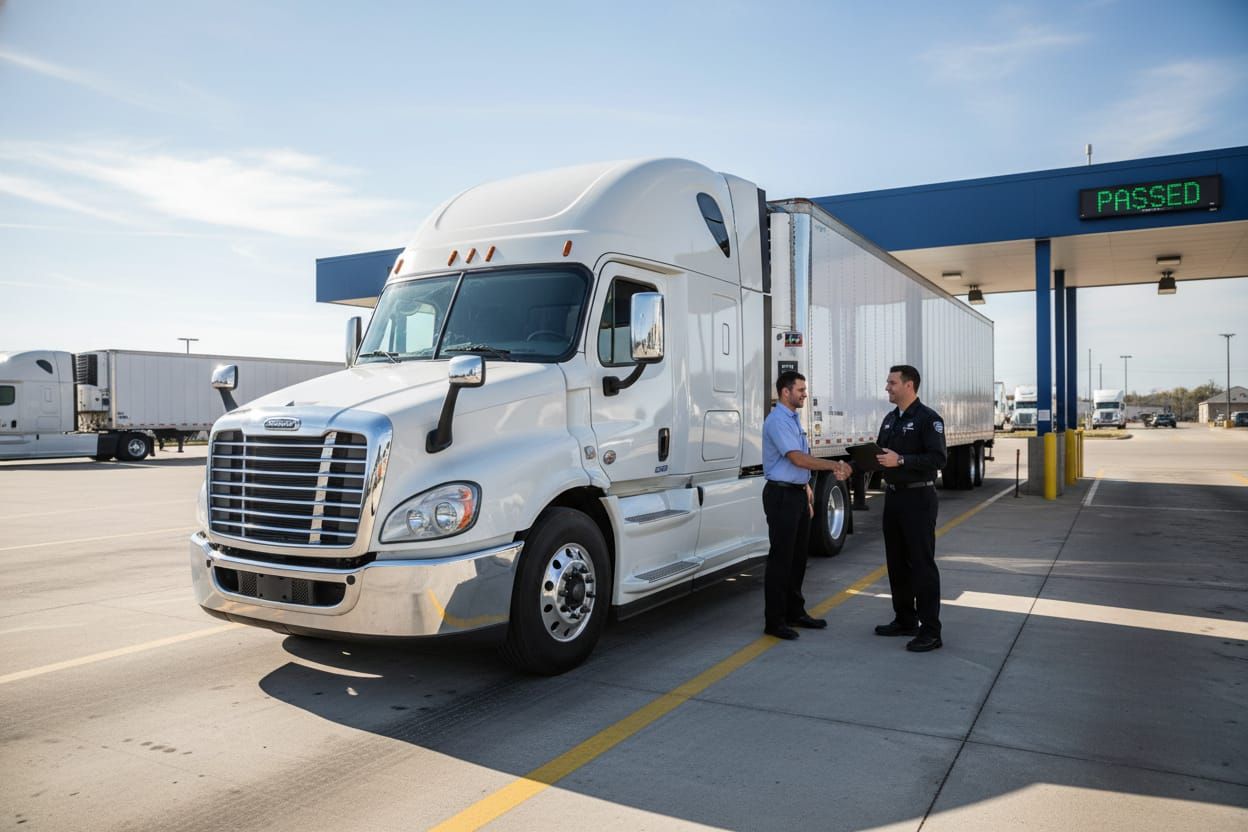
The 6 Types of DOT Drug & Alcohol Tests
There are six situations where you can (or must) be tested. Each has different rules about timing, who pays, and what triggers it.
When: Before your first safety-sensitive function (driving) for a new employer.
Drug test: Required
Alcohol test: Not required (but some carriers do it anyway)
Who pays: Employer
When: Unannounced, at any time while you're on duty or available to perform safety-sensitive functions.
Drug test: 50% of drivers per year (consortium minimum)
Alcohol test: 10% of drivers per year
Who pays: Employer
When: After an accident involving a fatality, a citation with bodily injury requiring medical treatment, or a citation with a towed vehicle.
Drug test: Within 32 hours of accident
Alcohol test: Within 8 hours (preferably within 2)
Who pays: Employer
When: A trained supervisor observes behavior suggesting drug or alcohol use (slurred speech, erratic driving, smell of alcohol, etc.).
Drug test: Based on observation
Alcohol test: Must be administered within 2 hours of observation
Who pays: Employer
When: Before returning to safety-sensitive duties after a violation. Must complete SAP evaluation and treatment first.
Drug test: Required (observed collection)
Alcohol test: Required (must be below 0.02 BAC)
Who pays: Driver
When: After returning to duty following a violation. Minimum 6 tests in first 12 months, can extend up to 60 months.
Drug test: Unannounced, per SAP schedule
Alcohol test: Unannounced, per SAP schedule
Who pays: Employer (or driver if owner-operator)
What the DOT Tests For
The DOT drug test is a 5-panel urine test. The alcohol test uses a breath alcohol technician (BAT) with an evidential breath testing device.
Marijuana Is Still a DOT Violation
Even in states where marijuana is legal recreationally or medically, it is still a federal violation for CDL holders. DOT follows federal law — not state law. A positive THC test will trigger the same consequences as any other positive: removal from duty, Clearinghouse reporting, SAP evaluation, and return-to-duty process. CBD products are legal but risky — some contain enough THC to trigger a positive test. If you drive commercially, avoid all THC and CBD products.
What Happens If You Test Positive
A positive drug test or alcohol result of 0.04+ BAC triggers a specific sequence of events. Understanding this process is important whether you're a driver or an owner-operator who hires drivers.
Immediate Removal from Duty
You are immediately prohibited from performing any safety-sensitive function (driving). This is effective as soon as the MRO (Medical Review Officer) verifies the positive result.
FMCSA Clearinghouse Reporting
The violation is reported to the FMCSA Drug & Alcohol Clearinghouse within 3 business days. This is visible to every future employer who queries the Clearinghouse — which they're required to do before hiring you.
SAP Evaluation
You must see a DOT-qualified Substance Abuse Professional (SAP). The SAP evaluates you and determines what treatment or education you need. This is at your expense ($400-$500 for evaluation).
Complete Treatment Program
Whatever the SAP prescribes — education classes, counseling, or treatment program — you must complete it before returning to duty. Duration varies from weeks to months. Cost: $500-$5,000+ depending on what's required.
SAP Follow-Up Evaluation
After completing treatment, return to the SAP for a follow-up evaluation confirming compliance. Another $200-$400.
Return-to-Duty Test
Take a directly observed drug test and/or alcohol test. Must be negative. $50-$100 per test.
Follow-Up Testing Program
Minimum 6 unannounced tests in the first 12 months. The SAP can extend follow-up testing up to 60 months total. These are in addition to regular random testing.
The Real Cost of a Positive Test
Plus: higher insurance premiums for years, difficulty finding employment, and a permanent Clearinghouse record.
The FMCSA Drug & Alcohol Clearinghouse
Since January 2020, all DOT drug and alcohol violations are reported to a central federal database. Here's what you need to know.
For Drivers
- Register at clearinghouse.fmcsa.dot.gov (free)
- Every employer queries the Clearinghouse before hiring you
- Current employers query annually
- Violations remain on record until the return-to-duty process is complete and reported
- You can view your own record at any time
- You must provide electronic consent for employer queries
For Owner-Operators
- You must register as both a driver AND an employer
- You must query yourself annually ($1.25 per limited query)
- If you hire drivers, you must query them pre-employment and annually
- You must report any violations for drivers you employ
- Carriers and brokers may check your Clearinghouse status before working with you
Setting Up a Compliant Testing Program (Owner-Operators)
If you have your own authority, you are the employer. That means you're responsible for having a compliant drug and alcohol testing program — even if you're the only driver.
Join a Consortium
A consortium (also called a Third-Party Administrator or TPA) manages your testing program. They handle random selection, scheduling, record-keeping, and Clearinghouse reporting. Cost: $50-$150/year per driver.
Common consortiums: DISA, National Drug Screening, US Drug Testing Labs, Compliance Associates.
Get Your Policy in Writing
You need a written drug and alcohol testing policy that meets 49 CFR Part 382 requirements. Most consortiums provide a template policy. Keep it on file — auditors will ask for it.
Complete a Pre-Employment Test
Before you start operating under your own authority, take a pre-employment drug test. Even though you're testing yourself, the process must follow DOT procedures at a certified collection site.
Register in the Clearinghouse
Register as both a CDL driver and as an employer at clearinghouse.fmcsa.dot.gov. Conduct a pre-employment query on yourself. Query annually going forward.
Respond to Random Selections
When your consortium selects you for a random test, you must report to the collection site immediately. "I was busy" is not an excuse — failure to report is treated as a refusal, which equals a positive result.
Annual Compliance Cost (Solo Owner-Operator)
A small price for staying legal. Non-compliance penalties: $16,000+ per violation.
Prescription Medications and CDL Driving
Having a valid prescription doesn't automatically mean you can drive. Some medications are compatible with CDL driving; others are not.
Generally Compatible
- Blood pressure medications
- Cholesterol medications (statins)
- Diabetes medications (with medical examiner approval)
- Antidepressants (SSRIs — stable dose, no side effects)
- Allergy medications (non-drowsy)
- Acid reflux medications
Disqualifying or Restricted
- Opioid painkillers (hydrocodone, oxycodone) — even with prescription
- Benzodiazepines (Xanax, Valium, Klonopin)
- Muscle relaxants (cyclobenzaprine, carisoprodol)
- Sleep aids (Ambien, Lunesta)
- Stimulants (Adderall, Ritalin) — most medical examiners won't certify
- Medical marijuana — always disqualifying under federal rules
Frequently Asked Questions
How long does marijuana stay detectable in a DOT drug test?
For occasional users: 3-10 days. For regular users: 15-30 days. For heavy/daily users: 30-90+ days. The DOT test uses a 50 ng/mL initial cutoff and 15 ng/mL confirmation cutoff. THC is fat-soluble and accumulates in body fat, so detection windows vary significantly based on usage frequency, body composition, and metabolism. The safest approach: if you hold a CDL, don't use marijuana or CBD products at all.
Can I use CBD oil as a CDL driver?
Technically legal, but extremely risky. CBD products are not FDA-regulated, and many contain more THC than their labels claim. Even "THC-free" CBD products have caused positive drug tests. The FMCSA has stated that CDL drivers use CBD at their own risk. If you test positive for THC, "I only used CBD" is not a defense. The safest approach: avoid all CBD and hemp products while holding a CDL.
What counts as a "refusal to test"?
A refusal is treated exactly the same as a positive result. Refusals include: declining to take the test, not showing up at the collection site, leaving before the process is complete, failing to provide a sufficient urine sample (without a valid medical explanation), tampering with or substituting a sample, and failing to report for testing when notified for a random test. If you're randomly selected, go immediately — don't delay.
Can I ever drive again after a positive DOT drug test?
Yes, but the process takes time and money. You must: (1) see a DOT-qualified SAP, (2) complete their prescribed treatment, (3) return to the SAP for a follow-up evaluation, (4) pass a directly observed return-to-duty test, and (5) complete follow-up testing (minimum 6 tests in 12 months). The entire process typically takes 2-6 months and costs $5,000-$22,000+. The violation stays on the Clearinghouse until the return-to-duty process is complete. Finding an employer willing to hire you with a Clearinghouse violation is harder but not impossible — some carriers specialize in second-chance drivers.
Compliance Protects Your Career
A clean testing record is one of the factors that keeps your insurance affordable. We work with owner-operators who take compliance seriously — and it shows in their rates.