Fleet Expansion Guide: Growing Your Trucking Company
Going from one truck to a fleet is the hardest transition in trucking. Here\u0027s how to grow without going broke — and the insurance, hiring, and financing decisions that make or break expansion.
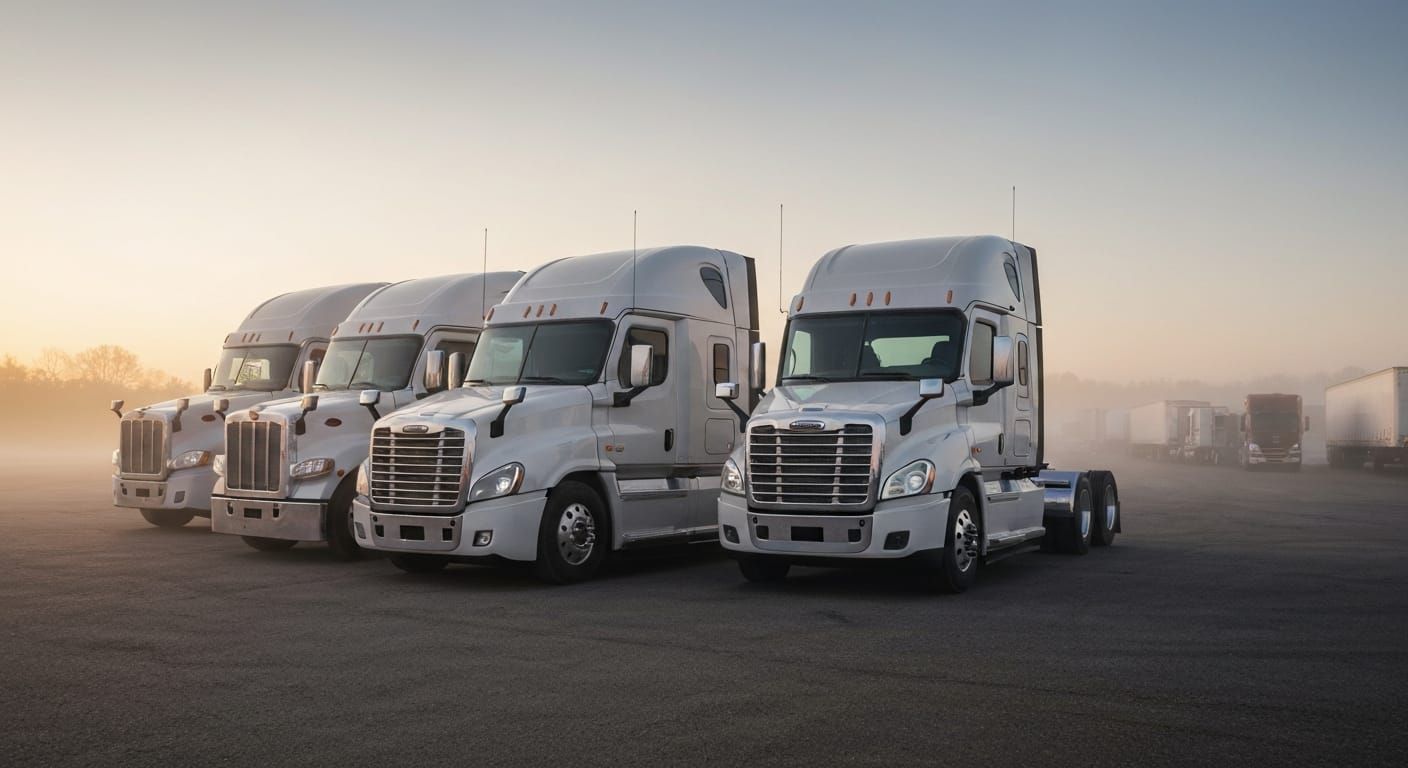
The 4 Growth Stages of a Trucking Company
Every fleet goes through the same stages. The challenges at each stage are different, and the strategies that work at one stage can destroy you at the next.
Solo Operator (1 Truck)
You\u0027re the driver, dispatcher, bookkeeper, and mechanic. Your biggest risk is YOU being unable to drive. Revenue stops when you stop.
Small Fleet (2-5 Trucks)
The hardest stage. You\u0027re still driving but now managing drivers too. Cash flow is tight because you\u0027re paying for trucks that don\u0027t always run. This is where most companies fail.
Mid-Size Fleet (6-20 Trucks)
You\u0027ve stopped driving and are managing full-time. You need office staff, better systems, and a real safety program. Insurance carriers start taking you more seriously.
Large Fleet (20+ Trucks)
You\u0027re a real company. Dedicated safety director, HR, maintenance shop. Better insurance rates, more carrier options, but higher overhead and more complexity.
When You\u0027re Ready to Add a Truck
Adding too early is the #1 killer of growing trucking companies. Don\u0027t add a truck until ALL of these are true.
Green Lights (Ready to Grow)
- Consistently turning down freight you could haul
- 6+ months of positive cash flow
- Emergency fund covers 3 months of expenses
- Clean safety record (CSA scores below threshold)
- Reliable driver identified or recruited
- Existing customers asking for more capacity
Red Flags (Not Ready)
- Adding a truck to increase revenue you\u0027re spending on debt
- Can\u0027t make current truck payment without factoring
- No savings buffer — living load to load
- Haven\u0027t figured out driver management yet
- Current truck has major maintenance issues
- "Everyone else is growing" motivation
The Cost of Adding One Truck
Truck payment: $1,800-$2,500/mo. Insurance increase: $800-$1,500/mo. Driver pay: $4,000-$6,000/mo. Fuel: $4,000-$7,000/mo. Maintenance: $500-$1,000/mo. Total: $11,000-$18,000/month in new expenses before you earn a dime. Can your operation absorb a month where that truck doesn\u0027t run?
Financing Your Fleet Expansion
| Method | Best For | Typical Terms | Caution |
|---|---|---|---|
| Commercial Loan | Established fleets (2+ years) | 5-7 year term, 6-10% APR | Requires good credit and tax returns |
| Equipment Lease | Preserving cash flow | 3-5 year term, higher total cost | You don\u0027t own the truck at end |
| Lease-Purchase | Drivers becoming owners | Varies widely | Often overpriced — read every clause |
| Cash Purchase | Well-capitalized owners | No payments, no interest | Ties up capital that could earn more |
| SBA Loan | Small businesses with collateral | 10-25 year term, lower rates | Slow approval process (60-90 days) |
Many successful fleet owners grow with used trucks (3-5 years old, 300K-500K miles). The truck costs $40K-$80K instead of $150K+, payments are half, and you can test whether the expansion works before committing to new iron. If the truck doesn\u0027t earn, you can sell it without taking a massive depreciation hit.
Hiring Drivers: The Bottleneck
You can buy 10 trucks tomorrow. Finding 10 good drivers to put in them is the real challenge. Bad hires cost $8,000-$15,000 each when you factor in recruiting, training, insurance impact, and lost revenue.
Where to Find Drivers
- Referrals from current drivers (best source)
- CDL schools (new drivers, trainable)
- Industry job boards (Indeed, CDLjobs)
- Truck stops and industry events
- Social media (Facebook trucking groups)
What to Screen For
- MVR — no major violations in 3 years
- Employment verification — gaps explained
- Drug/alcohol history (FMCSA Clearinghouse)
- References from previous carriers
- Attitude and reliability (interviews reveal this)
Insurance Impact of Drivers
- Each driver\u0027s MVR affects your premium
- Drivers under 25 or over 70 cost more
- Drivers with at-fault accidents spike rates
- CDL experience under 2 years limits carriers
- Some drivers are uninsurable — check first
Retention Strategies
- Competitive pay (check market rates quarterly)
- Consistent home time (keep promises)
- Good equipment (nobody stays for a junk truck)
- Respect and communication
- Safety bonuses and performance incentives
Run every potential driver\u0027s MVR past your insurance agent BEFORE you hire them. Some drivers are uninsurable or will increase your premium by $3,000-$5,000/year per driver. Finding out after you\u0027ve hired, trained, and put them on the road is an expensive mistake.
How Insurance Changes as You Grow
Limited Options, Higher Rates
Only 3-5 carriers will write new/small fleets. Expect $12,000-$18,000 per truck for auto liability. Limited negotiating power. Your agent\u0027s relationships matter most at this stage.
More Options, Better Rates
You\u0027re past the startup phase. More carriers will quote you. Rates start dropping to $8,000-$14,000 per truck. A safety program and clean claims history unlock the best carriers.
Fleet Pricing Unlocked
Fleet insurance programs kick in. Per-truck rates can drop to $6,000-$10,000. You might qualify for experience rating. Workers comp becomes a bigger line item. Umbrella coverage becomes essential.
Premium Options
Access to large fleet programs, self-insured retentions, and deductible buy-down programs. You need a dedicated safety director to maintain and improve your rates. Insurance becomes a strategic asset.
6 Fleet Expansion Mistakes That Kill Companies
Growing Too Fast
Adding 3 trucks in 6 months when your systems, cash flow, and management capacity support 1. Slow growth compounds. Fast growth explodes.
Hiring Warm Bodies
Putting anyone with a CDL in a truck because you have trucks sitting. Bad drivers cost you more in insurance, accidents, and customer relationships than an empty truck costs.
Ignoring Maintenance Scaling
Your maintenance approach that worked with 2 trucks collapses with 8. Without preventive maintenance systems, breakdowns multiply, CSA violations increase, and insurance premiums spike.
Undercapitalized Growth
Financing trucks with no cash reserves. One truck down for 3 weeks or one bad month wipes out your ability to make payments on ALL trucks. Keep 3 months\u0027 expenses in reserve.
Not Updating Insurance
Adding trucks and drivers without notifying your agent. If an accident happens with a truck or driver not on your policy, the claim gets denied. Update your policy the same day you add a vehicle.
Owner Still Driving at Stage 2-3
You can\u0027t drive 11 hours and manage a fleet. At 3-5 trucks, your highest-value activity is management, not driving. The transition from driver to manager is the hardest leap in trucking.
Growing Your Fleet? Let\u0027s Talk Insurance Strategy
Adding trucks, hiring drivers, expanding into new states — each step changes your insurance needs. We scale with you, from truck #1 to truck #50. Call us before you grow.
Call 208-800-0640Insurance that grows with your business.
Frequently Asked Questions
How many trucks should I add at once?
One at a time until you have systems and cash flow to support multiple additions. Most successful fleet owners add 1-2 trucks per year in the early stages. Once you have 10+ trucks with solid systems, you can accelerate. The graveyard of trucking companies is full of operators who added 5 trucks at once.
Does adding trucks always increase my insurance rates?
Adding trucks increases your total premium, but your per-truck rate often DECREASES as you grow. Carriers give volume discounts. At 5+ trucks, you unlock fleet pricing. At 10+, even better rates. The key is maintaining a clean safety and claims record as you grow.
Should I hire company drivers or lease to owner-operators?
Company drivers give you more control over safety, schedules, and brand. Owner-operators reduce your equipment costs but add complexity (they need their own insurance for some coverages). Most small fleets start with company drivers for simplicity. At 10+ trucks, a mix often works best.
When should I stop driving and manage full-time?
Most experts say 3-5 trucks is the tipping point. At that size, management tasks (dispatch, billing, compliance, driver issues) consume enough time that your driving productivity drops and management suffers. Calculate what your management time is worth — if managing saves more than you\u0027d earn driving, it\u0027s time to park.