Weigh Station Guide for Truckers: What Happens Inside, Bypass Programs, and How to Avoid Fines
There are roughly 700 permanent weigh stations across the US, and every one of them can cost you time, money, or your authority. Knowing what happens inside, what triggers a closer look, and how bypass programs work separates professionals from drivers who get surprised. Here's everything you need to know.
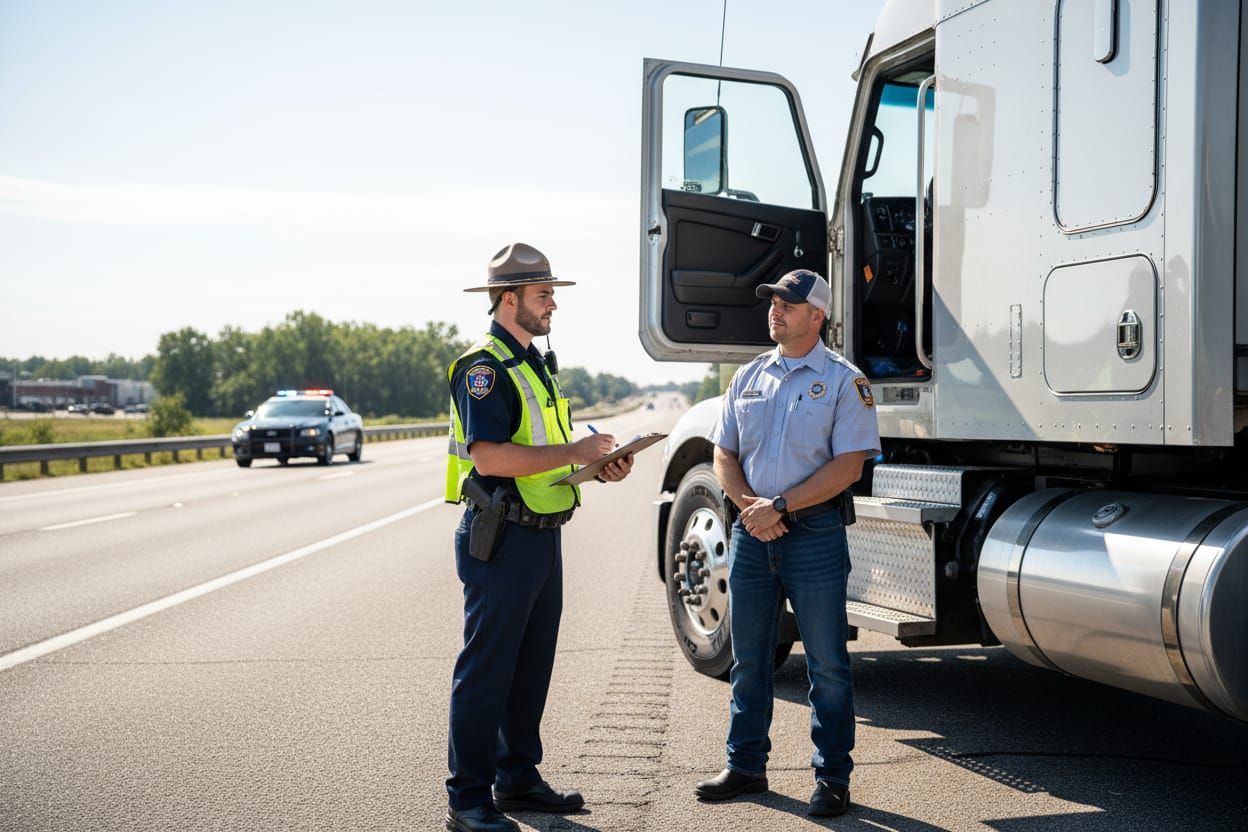
How Weigh Stations Actually Work
When you roll into a weigh station, here's the process from entry to exit:
Many stations use Weigh-in-Motion (WIM) sensors embedded in the highway approach. These weigh your truck at highway speed. If you're within limits and your carrier's ISS score is good, you may get a green light to bypass without stopping.
If pulled in, you roll slowly onto the static scale. This gives an exact axle-by-axle weight reading. You'll see your weights displayed. If everything's good, you get the green light to proceed.
If something triggers a closer look — weight issues, ISS score, random selection, or visual problems — you'll be directed to the inspection area. This is where things get time-consuming and potentially expensive.
What Triggers a Closer Inspection
Your Inspection Selection System score is calculated from your carrier's CSA data. High scores = higher probability of inspection. Scores above 75 are nearly guaranteed to be pulled in.
If pre-screening sensors detect you're over the legal limit, you'll be directed to the static scale. Even 500 lbs over on a single axle triggers a stop.
Leaking fluids, damaged tires, loose loads, broken lights, smoking brakes — inspectors watch every truck that enters. Visible problems mean an immediate Level I or II inspection.
Cameras read your plates. Expired registration, missing IFTA sticker, or mismatched plates flag you immediately.
Even with perfect scores, you can be randomly selected. This is less common but happens. Good carriers usually get a Level III (driver-only) inspection in these cases.
Some states target out-of-state carriers more heavily. Not official policy, but experienced drivers know certain states inspect non-local trucks more frequently.
The 6 Inspection Levels
Not all inspections are the same. The level determines what gets checked and how long you'll be parked:
| Level | Name | What's Checked | Typical Duration |
|---|---|---|---|
| Level I | North American Standard | Full vehicle + full driver inspection — everything | 45-90 min |
| Level II | Walk-Around | Driver credentials + walk-around vehicle inspection (no under-vehicle) | 20-45 min |
| Level III | Driver-Only | Driver credentials, ELD/logs, medical card, CDL — no vehicle check | 10-20 min |
| Level IV | Special Inspection | One-time, focused inspection on a specific item | Varies |
| Level V | Vehicle-Only | Vehicle inspection without driver present (terminal audit) | 30-60 min |
| Level VI | Enhanced NAS for Radioactive | Full Level I + radiological-specific checks | 60-120 min |
Federal Weight Limits and Axle Rules
| Configuration | Federal Maximum | What It Means |
|---|---|---|
| Gross Vehicle Weight (GVW) | 80,000 lbs | Total weight of truck + trailer + cargo + fuel + driver |
| Single Axle | 20,000 lbs | Steer axle limit |
| Tandem Axle | 34,000 lbs | Drive axles and trailer tandems |
| Bridge Formula | Varies by spacing | Weight distribution based on distance between axles |
State Exceptions to Know
Overweight Penalties: What It Actually Costs
Overweight fines vary wildly by state and by how much you're over. Here's a representative sample:
| Pounds Over Limit | Low-Fine States | High-Fine States | Average |
|---|---|---|---|
| 1-1,000 lbs | $50-$100 | $200-$500 | ~$150 |
| 1,001-2,500 lbs | $100-$300 | $500-$1,500 | ~$500 |
| 2,501-5,000 lbs | $300-$800 | $1,500-$5,000 | ~$1,500 |
| 5,001-10,000 lbs | $800-$2,000 | $5,000-$15,000 | ~$4,000 |
| 10,000+ lbs | $2,000-$5,000 | $10,000-$25,000+ | $5,000+ |
Bypass Programs Compared
Bypass programs let qualifying trucks skip weigh stations entirely — saving 15-30 minutes per stop. Here's how they compare:
ROI Calculation
A bypass subscription pays for itself 6-15x over in saved time. For owner-operators, the time savings translates directly to revenue.
Weigh Stations and Your CSA/Insurance
Everything that happens at a weigh station feeds into your carrier's safety profile:
Helps Your Record
- Clean inspections (no violations) improve your CSA percentile
- Good ISS scores lead to more bypasses
- Consistent compliance shows insurers you're a good risk
- Clean Level I inspections are the most valuable positive data
Hurts Your Record
- OOS orders carry highest CSA severity weights
- Overweight violations affect Vehicle Maintenance BASIC
- Multiple violations in 12 months trigger escalation
- High CSA percentiles increase insurance premiums 15-40%
6 Pro Tips for Weigh Stations
Use CAT scales or truck stop scales to check axle weights after loading. Moving your 5th wheel and trailer tandems shifts weight between axle groups. $12-15 for a CAT scale ticket is cheaper than any overweight fine.
An inspector who sees a burned-out light or leaking seal will pull you in for a full inspection. Check your lights, tires, and visible equipment every morning. Fix problems before you encounter a station.
CDL, medical card, registration, insurance card, IFTA, IRP cab card, Bill of Lading, hazmat docs if applicable. Having everything organized and immediately accessible makes inspections faster.
Inspectors remember difficult drivers. Being polite, having a clean cab, and cooperating fully doesn't prevent violations — but it often determines whether you get a Level III (quick) vs Level I (full) inspection.
When you know your truck and logs are perfect, pull into an open weigh station and ask for a Level III. A clean inspection adds positive data to your CSA record. It's a 10-minute investment that pays dividends.
Running a weigh station (driving past when directed to enter) is a federal violation with fines up to $10,000. Some states have cameras and will issue citations by mail. It also triggers immediate investigation of your carrier.
Frequently Asked Questions
Do I have to stop at every weigh station?
If the station is open and the sign says to enter, yes — unless you have a bypass transponder or app giving you a green light. Bypassing an open weigh station without authorization is illegal. Closed stations (lights off, no signs) do not require entry. Some stations are "port of entry" stations that also handle permits and fuel tax — these may require all trucks regardless of bypass status.
What's a good ISS score?
ISS scores range from 0-100. Lower is better. Scores below 50 generally mean lower inspection probability. Scores above 75 mean you'll be inspected almost every time. Your ISS score is based on your carrier's CSA scores — individual drivers can't see their ISS score directly, but your carrier can through the SMS website.
Can I dispute an overweight ticket?
Yes, but the burden of proof is on you. If you have a recent CAT scale ticket showing you were within limits at a certified scale, that's strong evidence. Scales can drift, and if your truck was weighed within hours at a certified scale and was legal, contest the ticket. Otherwise, overweight tickets are hard to fight — the state's scale is presumed accurate.
How do weigh station violations affect my insurance?
Weigh station violations appear on your CSA record, which insurance companies review at quoting and renewal. Clean inspections actually improve your insurability. Multiple violations, especially OOS orders, increase premiums. A good safety record at weigh stations is one of the strongest signals insurers use to identify low-risk carriers. Contact RMS to learn how your inspection history affects your rates.
Clean Record = Better Rates
Clean inspections and good CSA scores mean lower insurance premiums. We know which carriers reward compliance the most.
Get Your Free QuoteOr call (208) 602-1344